Home / How it is made
From the furnace to your table
Before a glass from Květná reaches its owner it passes through the hands of glassblowers at the furnace, cutters, technicians and quality control. Often ten pairs of hands give it its final form.
-
The gather and the mould
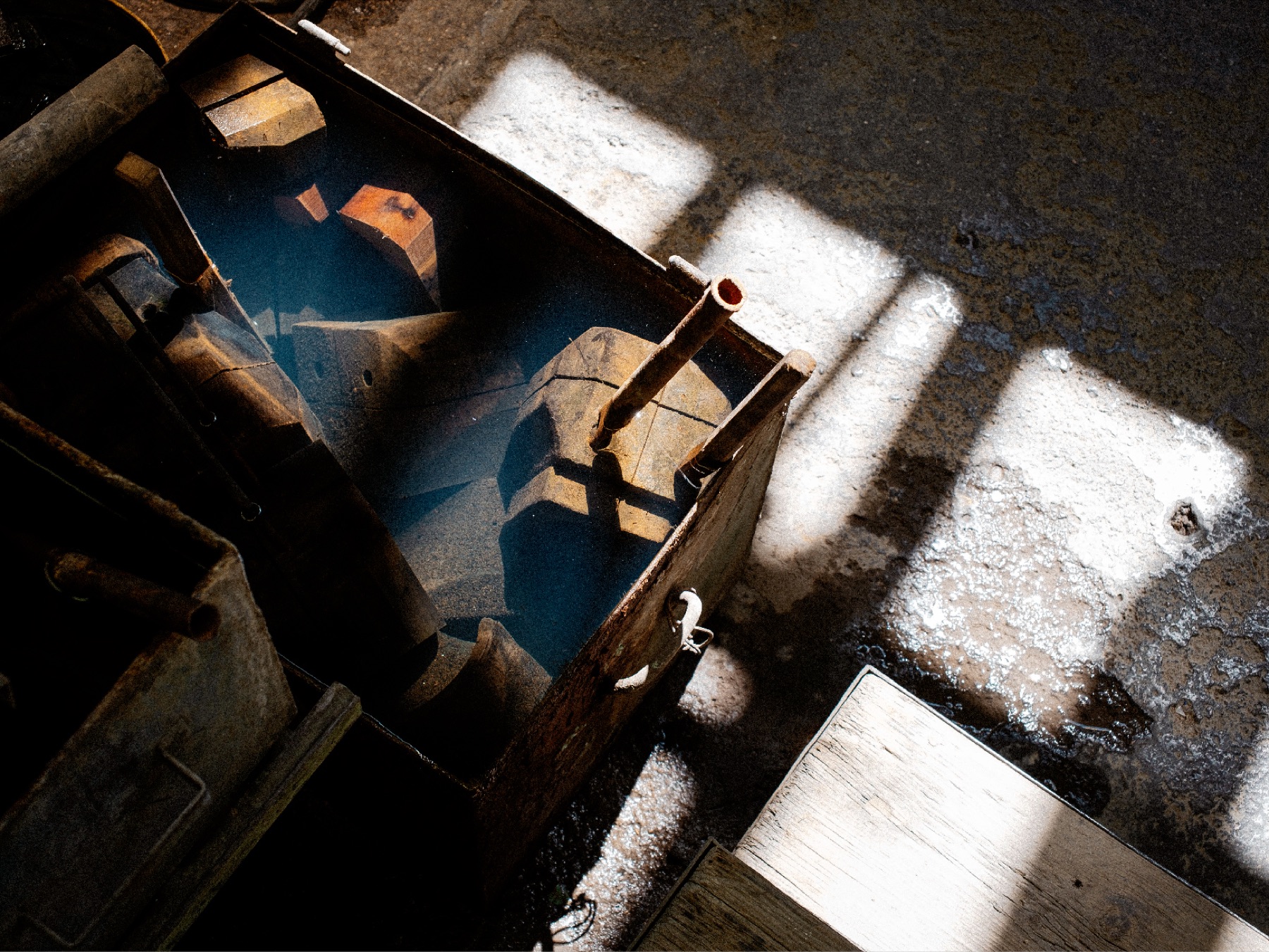
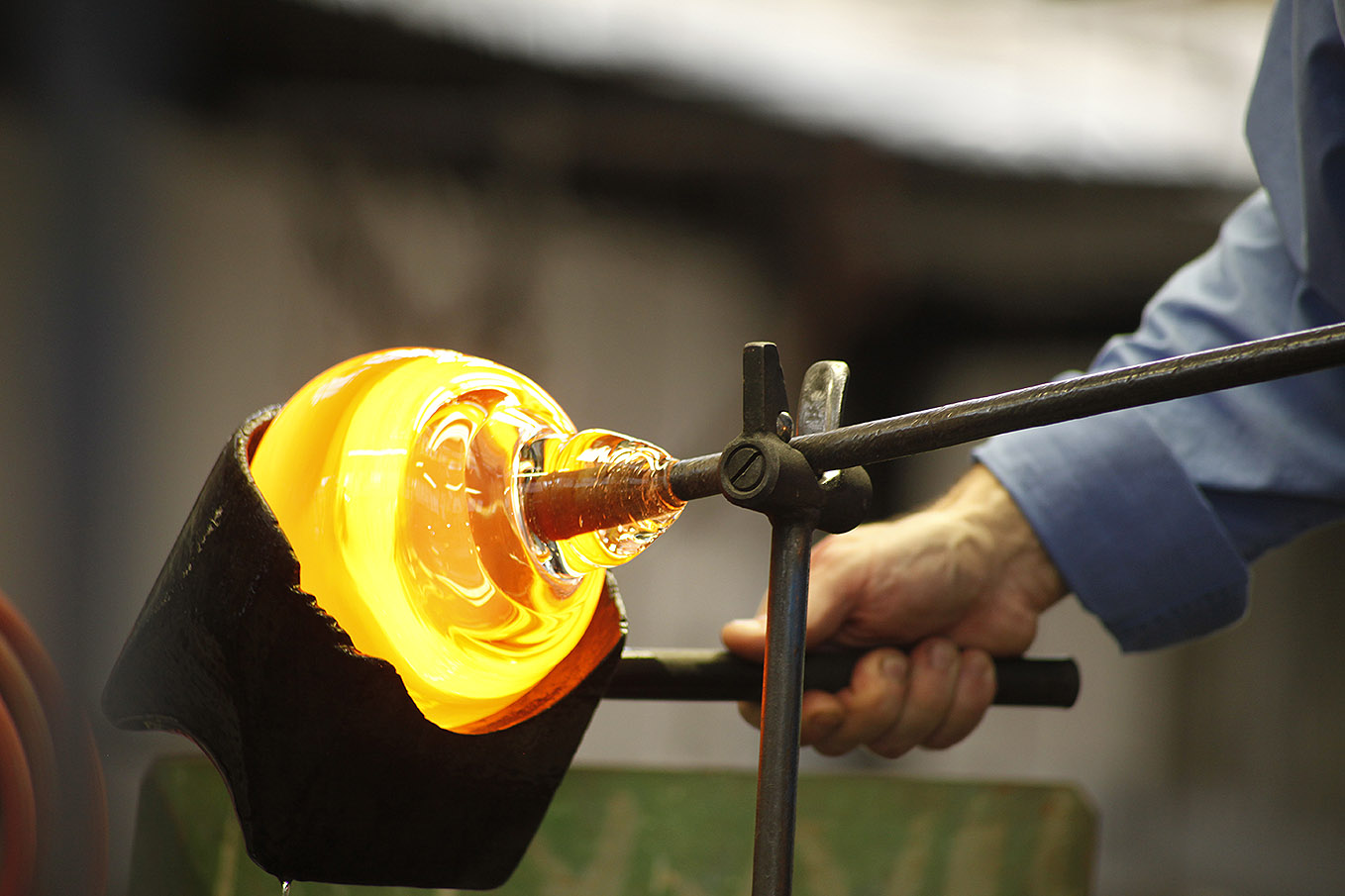
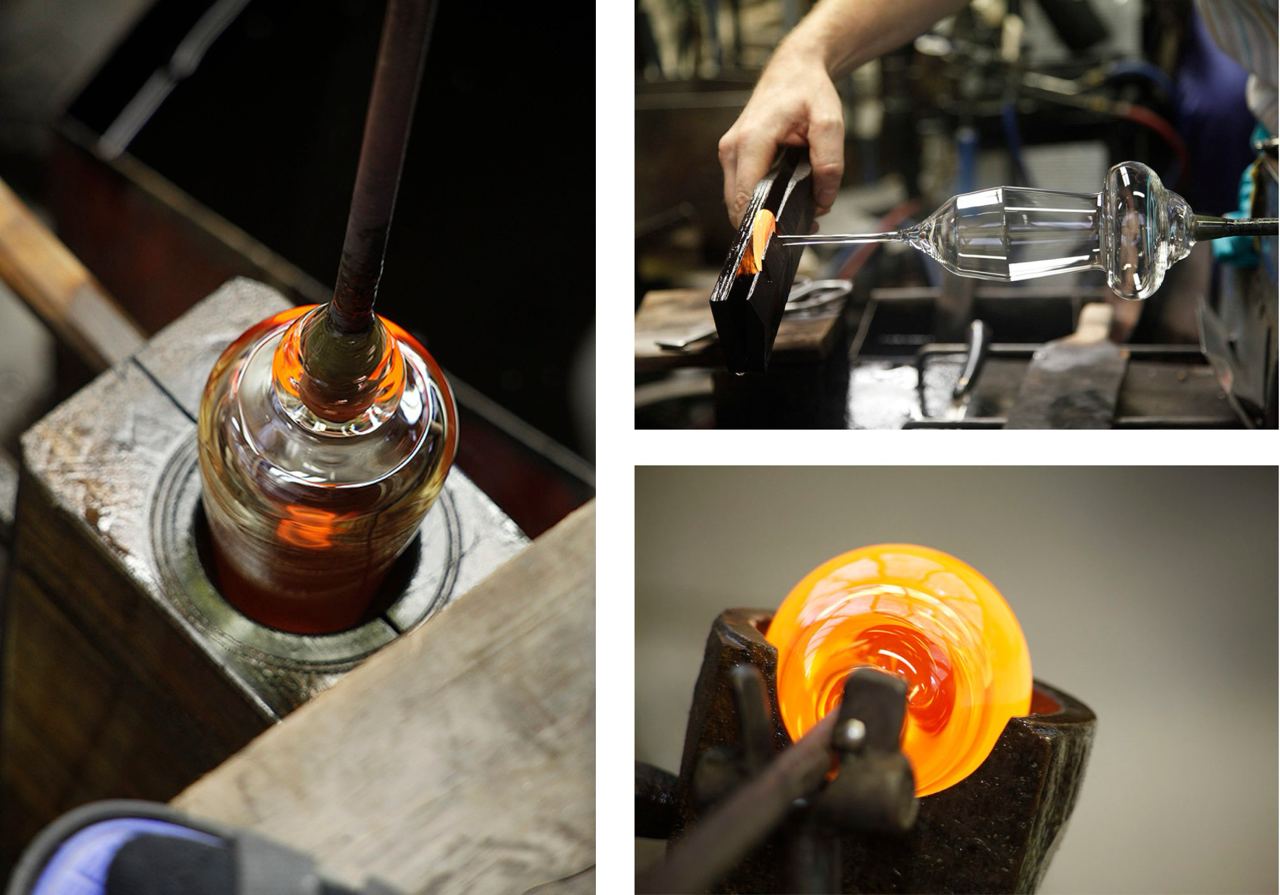
The glassmaker gathers molten glass on the blowpipe and blows it into a mould. The bubble turns while it takes shape, so the walls stay even and thin.
-
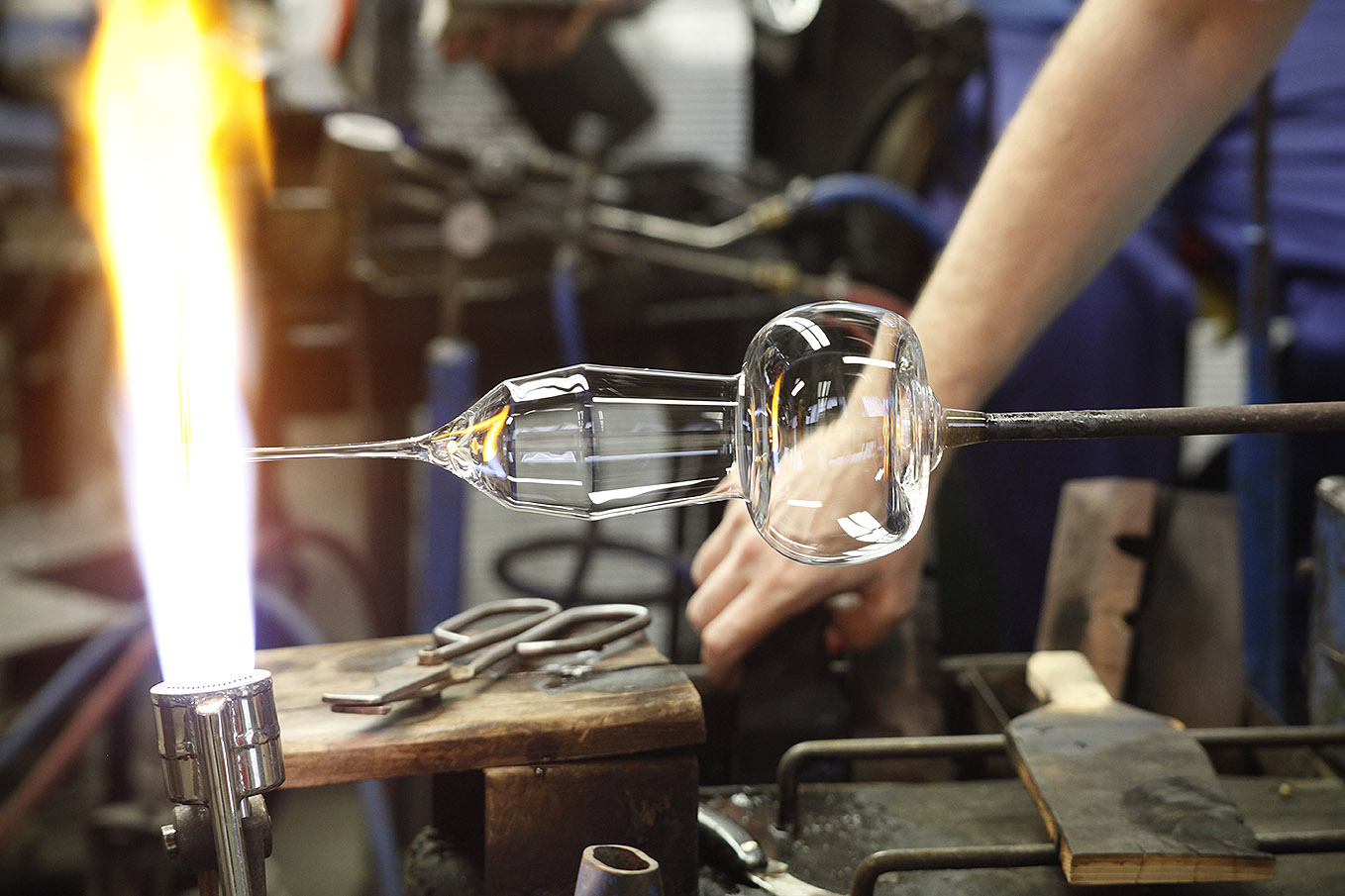
The stem, drawn from one piece
The stem is pulled out of the same glass as the bowl. A machine cannot do this, so on machine-made glasses the stem is glued on, and the joint is where they tend to break.
-
Cutting, finishing, checking
After slow cooling the glass goes to the cutters and technicians, then to quality control. Only then does it go to the shop.
The glass itself
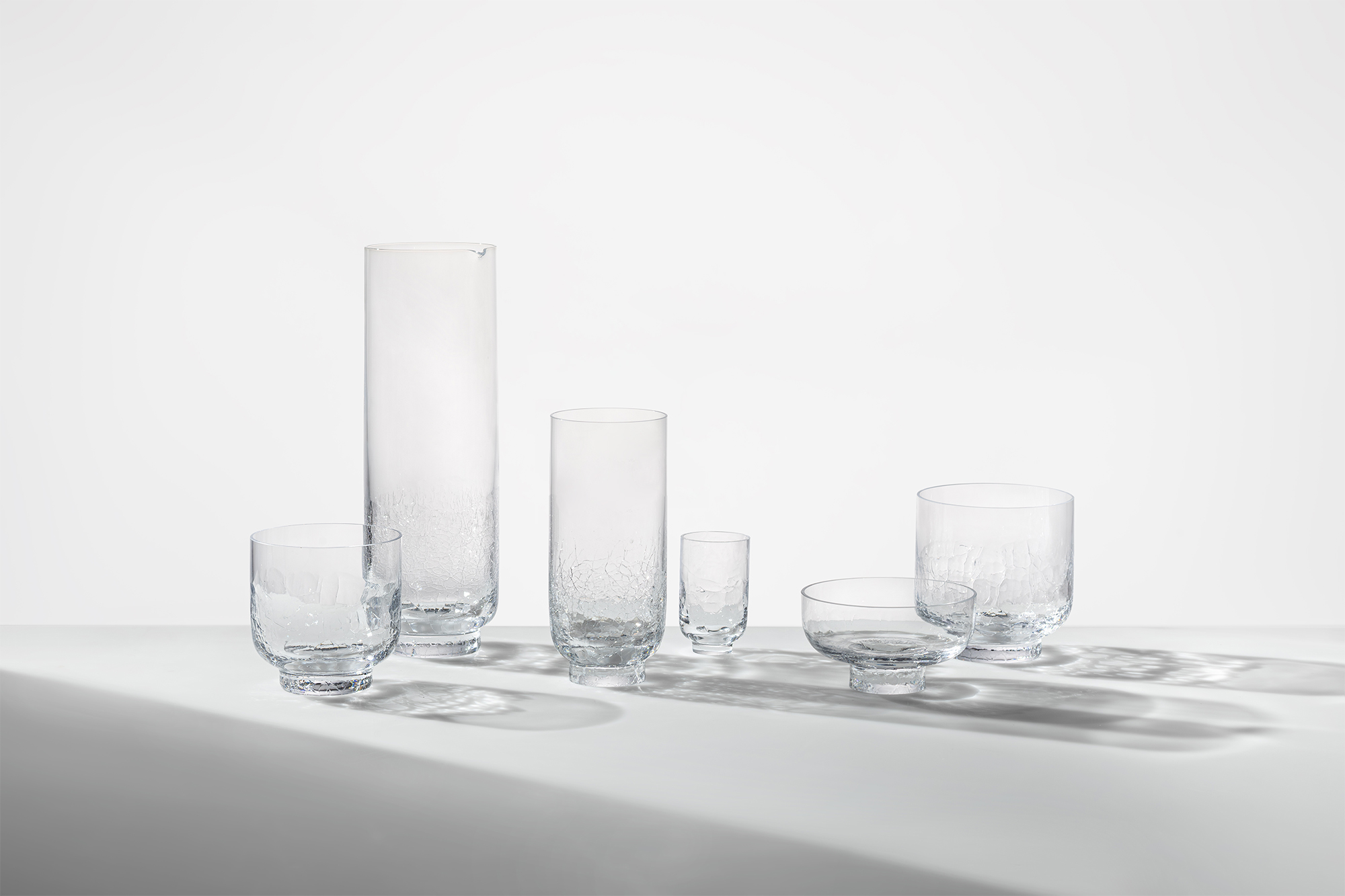
Květná melts a soda-potassium crystal glass without lead or other heavy metals. The recipe has been refined for years, and since 2021 it has been enriched with titanium, which makes clear glass more durable while keeping it light and flexible.
Hand or machine
Many glasses are sold as hand-cut or hand-decorated. That only means a machine made them and a person finished them.
| Aspect | Blown by hand in Květná | Made by machine |
|---|---|---|
| Stem | Drawn from the same piece as the bowl | Made separately and glued on |
| Strength | No joint, high resistance even when very thin | The joint loses strength and breaks more easily |
| Walls | Thinner than machines usually manage | Usually thicker |
| Who makes it | A master glassmaker at the furnace | A production line, sometimes finished by hand |